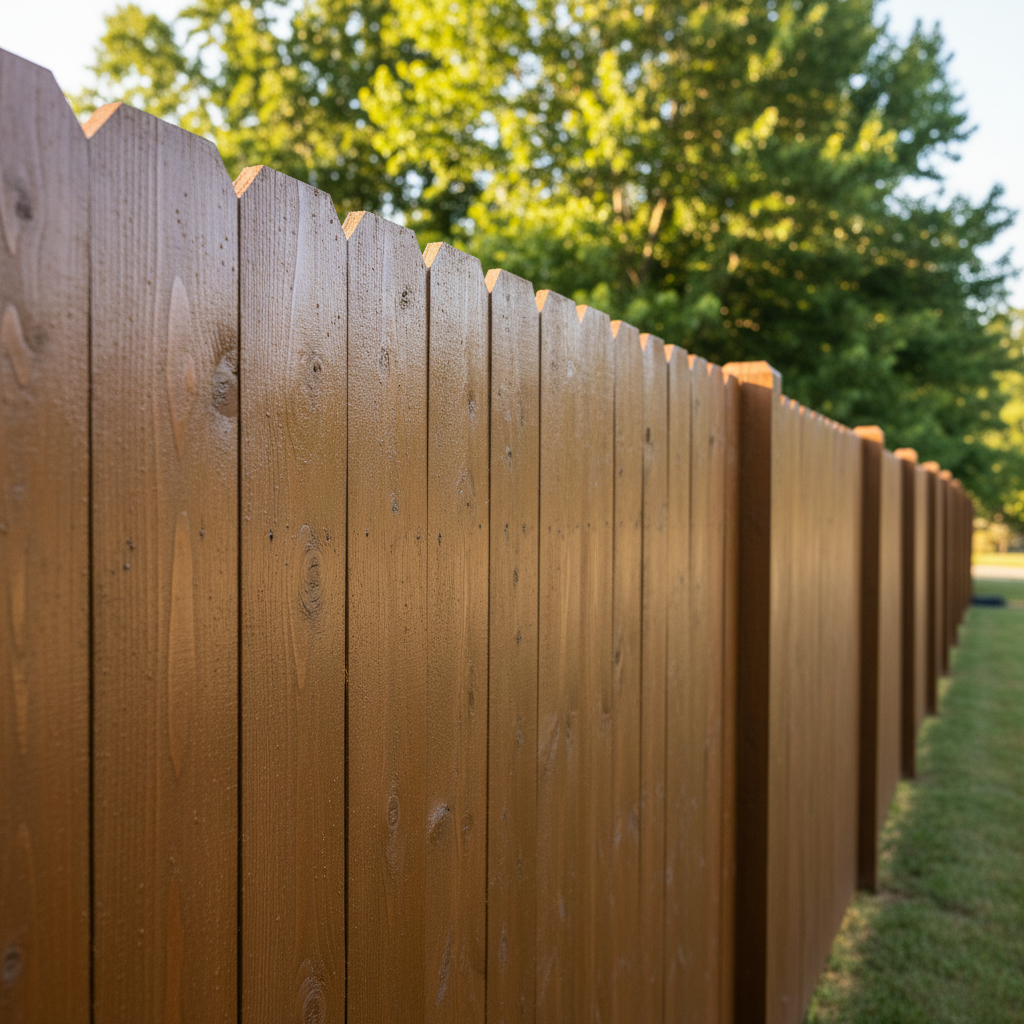
Alright, let's talk about keeping your fence looking good. Folks around Maryville often ask me whether they should stain or paint, when to do it, and which products are best. It’s smart to think about this stuff, because a well-kept fence doesn't just look nice; it lasts a whole lot longer. Here are the most common questions I get, along with my honest answers.
Should I stain or paint my wooden fence? What's the real difference?
This is probably the number one question I hear, and it’s a good one, because there’s a big difference. Stains actually soak into the wood. They color the fibers and let the natural grain show through. Think of it like a tinted moisturizer for your skin – it just enhances what’s already there. Paints, on the other hand, sit right on top of the wood. They form a solid, opaque layer, completely covering the grain. That’s more like a full coat of makeup.
For most wooden fences, especially pressure-treated pine or cedar, I usually suggest staining. Why? Well, wood breathes. It expands and contracts with our Maryville weather – those hot, humid summers and cold, damp winters, you know? Stain moves better with the wood. Paint, since it's just a surface layer, is way more likely to crack, peel, and blister over time as the wood underneath shifts. When paint starts to fail, it's a real pain to fix because you have to scrape and sand so much. Stain just fades gracefully, and you can often reapply it without a ton of prep work. Easy peasy.
How often do I need to re-stain or repaint my fence?
Unfortunately, there's no single answer for this. It really depends on a few things: the product you used, the type of wood, and how much sun and rain your fence gets. Generally, a good quality semi-transparent stain will last anywhere from 3 to 5 years. Solid stains might hold up for 5 to 7 years. Paint, if you apply it correctly and you're lucky, could last 5 to 10 years before it starts looking rough.
But here’s the thing: the side of your fence facing the most sun and weather, maybe a west-facing fence line on a property in Louisville, will always fade faster. You might find yourself needing to touch up or re-stain that side a year or two sooner than the others. My best advice? Inspect your fence every year. If the color is fading, the wood looks dry, or water isn't beading up on the surface anymore, it's probably time to get to work.
What kind of prep work is involved before staining or painting?
This is where most DIYers mess up, and it’s also the most crucial step. No matter how good your stain or paint is, it won't stick or last if the surface isn't clean and ready. First, you need to clean the fence. I'm talking about getting rid of dirt, grime, mildew, and any loose old stain or paint. A good power washing (but not too high pressure – you don't want to damage the wood!) with a fence cleaner usually does the trick. Let it dry completely – and I mean completely, for a few sunny days if possible. If you stain or paint wet wood, you’re just asking for trouble. Any loose nails should be hammered in, and any major repairs done. If you're painting over old paint, you'll need to scrape any peeling sections and sand them smooth. Seriously, don't skip the prep; it's what makes the difference between a job that lasts and one you'll be redoing next year.
Can I change from stain to paint, or paint to stain?
Yep, you can, but it's not always easy. Going from stain to paint is the simpler route. Once the old stain is clean and dry, you can usually apply paint right over it. The paint will cover it completely. Going from paint to stain? Now that’s a much bigger project. You'd need to remove almost all of the old paint. We're talking heavy scraping, sanding, and maybe even chemical strippers. Why? Because stain needs to penetrate the wood. If there's a layer of paint blocking it, the stain won't soak in and won't protect the wood properly. Most folks decide it's not worth the effort and just repaint if they started with paint.
What are the best products to use for our Maryville climate?
For wood fences, I always lean towards oil-based or oil-modified stains. They really penetrate deeper and offer better protection against moisture, which is super important with our humidity. Look for products that specifically mention UV protection, mildew resistance, and water repellency. Brands like Ready Seal, TWP, or some of the higher-end Sherwin-Williams or Benjamin Moore stains are usually solid choices. For paint, a good quality exterior acrylic latex paint designed for fences or siding will hold up well. Don't skimp on quality here; the cheap stuff just won't last in our climate. It’s a false economy, believe me.
Is it better to spray or brush/roll the stain/paint?
Both methods have their good points and bad points. Spraying is definitely faster, especially on a big fence. You can cover a lot of ground quickly. However, you need to be really careful about overspray – you definitely don't want to accidentally stain your neighbor's car, house, or their prize-winning petunias. Wind is your enemy when spraying. If you spray, I always recommend back-brushing or back-rolling. This means immediately after spraying a section, you go over it with a brush or roller to work the product into the wood and make sure it's evenly covered. This helps prevent drips and improves adhesion.
Brushing and rolling take more time and effort, but they give you much better control and generally ensure deeper penetration, especially with stain. For smaller fences, or if you're worried about overspray, brushing is the way to go. Here at Allied Fencing, we often use a combination – spraying for speed, then back-brushing for quality. It’s the best of both worlds.
Can I stain or paint a brand new pressure-treated fence right away?
Hold your horses on that one! This is a really common mistake. New pressure-treated lumber needs time to dry out. It's full of moisture and chemicals from the treatment process. If you stain or paint it too soon, the product won't stick properly, and you'll end up with peeling, blistering, or an uneven finish. The general rule of thumb is to wait anywhere from 3 to 6 months, sometimes even up to a year, depending on the weather. You want the wood to be dry enough to absorb the stain or allow the paint to bond. A simple test is to sprinkle some water on the fence; if it beads up, it's still too wet. If it soaks in, you're probably good to go.
Taking care of your fence is an investment in your home's appearance and how long it lasts. Don't rush it, use good products, and do the prep right. You'll be glad you did.