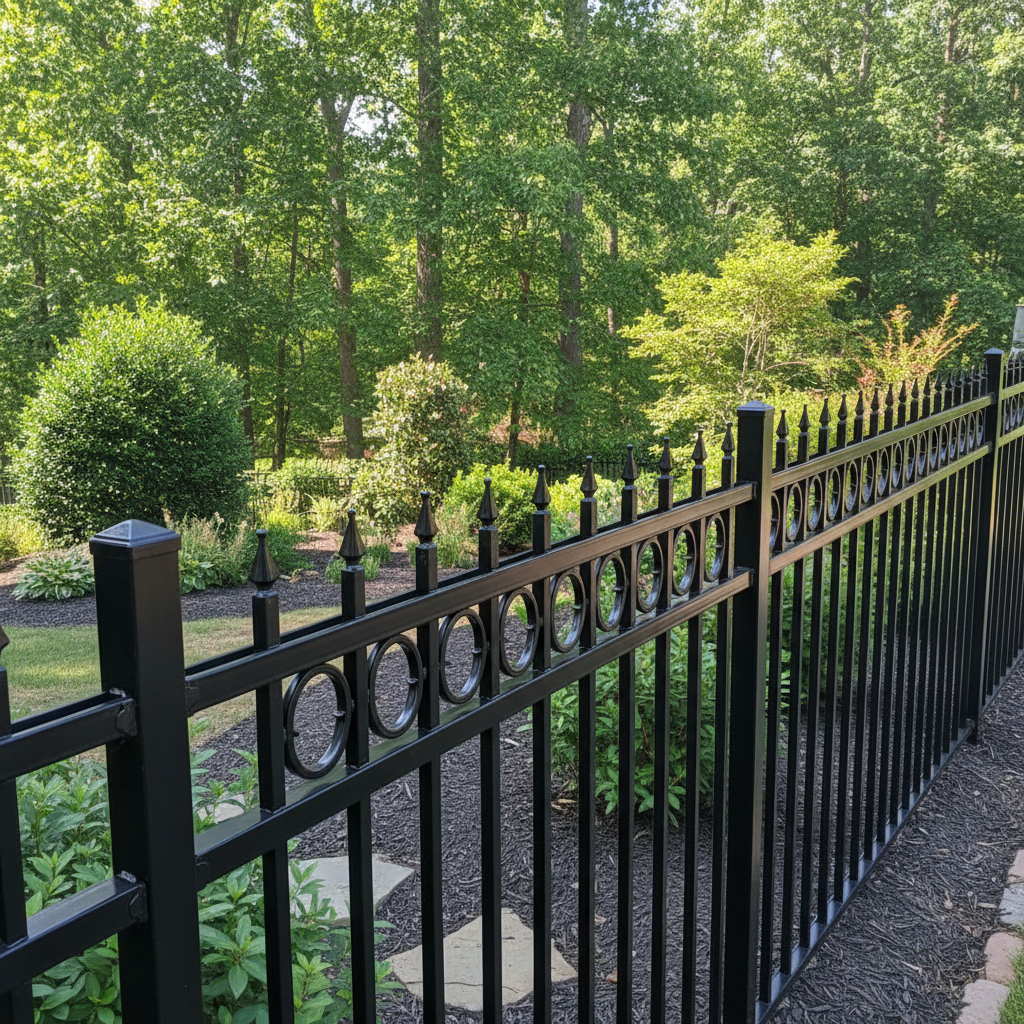
You're probably thinking about an ornamental iron fence for your place, and honestly, that's a smart move. They look amazing, really bump up your curb appeal, and if they're put in right, they can last forever. But I bet you've got questions. Everyone does! It's a pretty big investment, and you want to make sure you get it right, right? So, let's talk about some of the most common things folks in Maryville ask me about ornamental iron fencing.
What's the real cost of ornamental iron fencing?
This is always the first question people ask, and it's totally fair. The truth is, there's no single price tag because a few things come into play. Are you looking for something basic, maybe a pre-fabricated panel design, or do you want a custom job with fancy scrollwork? The fence's height also makes a difference. A 4-foot fence will cost less per linear foot than, say, a 6-foot privacy-style iron fence. Then there are gates – a simple walk gate is one thing, but a big double-swing driveway gate with automatic openers? That's a whole different ballgame. Generally, you'll pay more upfront than you would for wood or vinyl. But remember, you're buying something super durable and a classic look that actually adds value to your property for decades. Think of it more as an investment, not just another expense. Most projects will run you several thousand dollars, and that can climb quite a bit for bigger or more custom jobs.
What's the difference between wrought iron and ornamental iron?
Good question! These terms get tossed around a lot, and often people use them incorrectly. Real wrought iron, the kind a blacksmith hammered by hand, is super rare and expensive these days. Most of what people call 'wrought iron' now is actually ornamental iron, which is made from steel. It's still tough, long-lasting, and you can shape it into beautiful designs, but it's not the same material or process as traditional wrought iron. When I talk about ornamental iron, I mean steel fences that we weld together and then usually powder-coat for protection. It gives you that classic, elegant look without the crazy cost of genuine wrought iron. It's what Allied Fencing installs, and frankly, it's what most people are actually looking for when they say 'wrought iron.'
Will it rust, especially with our Maryville weather?
This is a big worry for folks, and it's a completely valid one, especially with our humid summers and wet winters here in East Tennessee. The short answer is: modern ornamental iron fencing is built to fight off rust way better than older iron fences. The finish is key. A really good powder coating is your best friend here. It's a tough, baked-on finish that creates a strong barrier against moisture and the elements. Some systems even have a galvanized layer under the powder coat for extra protection. Now, nothing is totally indestructible forever. If the powder coat gets scratched deep enough to expose the bare metal, or if it's always sitting in standing water, you might see some surface rust eventually. But with proper installation and a little bit of upkeep – like touching up any deep scratches – your fence will look fantastic for a very, very long time. It's not like the old days where every iron fence turned into a rust bucket after a few years, you know?
How much maintenance does an ornamental iron fence need?
Compared to a wood fence, it's pretty low maintenance. You won't be staining or painting it every few years, thank goodness. Mostly, you just need to keep it clean and do occasional checks. I tell my clients to simply rinse it down with a hose now and then to get rid of dirt, pollen, and cobwebs. If you spot any spots where the powder coat has chipped or scratched, especially if you can see bare metal, it's a good idea to touch it up with a rust-inhibiting paint that matches your fence color. You can usually grab a touch-up kit from your installer. For gates, you'll want to lubricate hinges and latches about once a year to keep them swinging smoothly. That's really about it. It's pretty much a set-it-and-forget-it kind of fence, for the most part.
Can I get an ornamental iron fence on a sloped yard?
Absolutely, you can. This is a super common situation in Maryville, especially in neighborhoods like Montvale or those older homes with established, sometimes uneven, landscaping. We handle slopes in a couple of ways. One method is called 'racking,' where the fence panels are made or put together to follow the ground's slope. This gives it a really clean, continuous look. The other way is 'stepping.' Here, each fence panel is installed level, but then it drops down in steps to handle the change in elevation. Stepping is often cheaper, but racking usually looks more custom and, well, seamless. The best approach really depends on how steep your slope is and what look you prefer. A good fence contractor will check out your yard and suggest the best method to make sure your fence looks great and works right.
Are there different styles or designs available?
Oh, definitely! That's one of the coolest things about ornamental iron. You're not stuck with just one look. You can go for a very classic, simple picket style with flat-top rails, or you can get something much more ornate with decorative finials, rings, and intricate scrollwork. There are options for different picket spacing, too, which can impact security or how easily pets might squeeze through. Some people like a more modern, minimalist look, while others want something that gives off old-world charm. We can even add custom touches like family initials or specific designs into gates or panels. The design possibilities are pretty huge, which is why they call it 'ornamental' iron – it's supposed to be decorative as well as functional. Just tell me what you're picturing, and we can usually make it happen.